Token Orchestration: Payments Orchestration Without Limits
Create engaging commerce flows, connect with any partner, effortlessly manage compliance, and keep control of your payments data.
A New, Better Kind of Partner

Avoid vendor lock-in
Open access and documentation
Dedicated support
Upgrade to Basis Theory

Flexible Routing
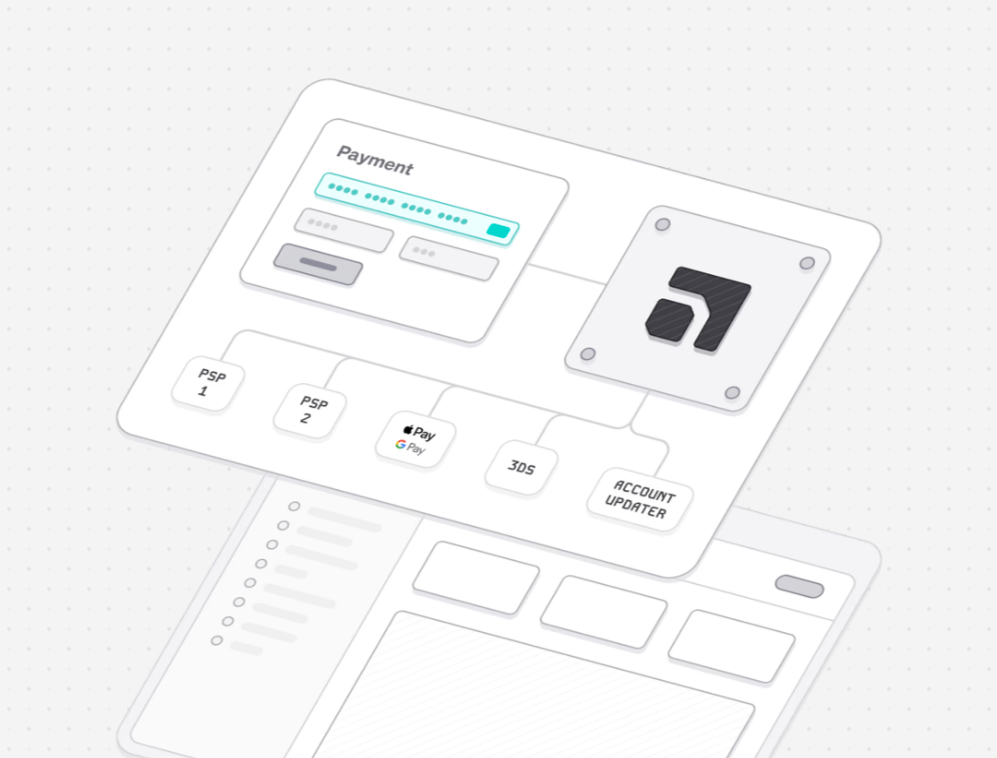
Build simple or complex routing logic without limitations, all while securing data in a PCI Level 1 compliant vault.
More Options
Friendlier Pricing
How is Basis Theory Different?
Comparing Basis Theory and Traditional Orchestration Platforms
| Basis Theory | Other Orchestration Platforms | |
|---|---|---|
| Compliance |
|
|
| Customer Support |
|
Customers often receive support by accessing help center documentation or submitting a request. |
| Integrations |
Integrate with PSPs, payment gateways, and third-party APIs |
| Transaction Flows |
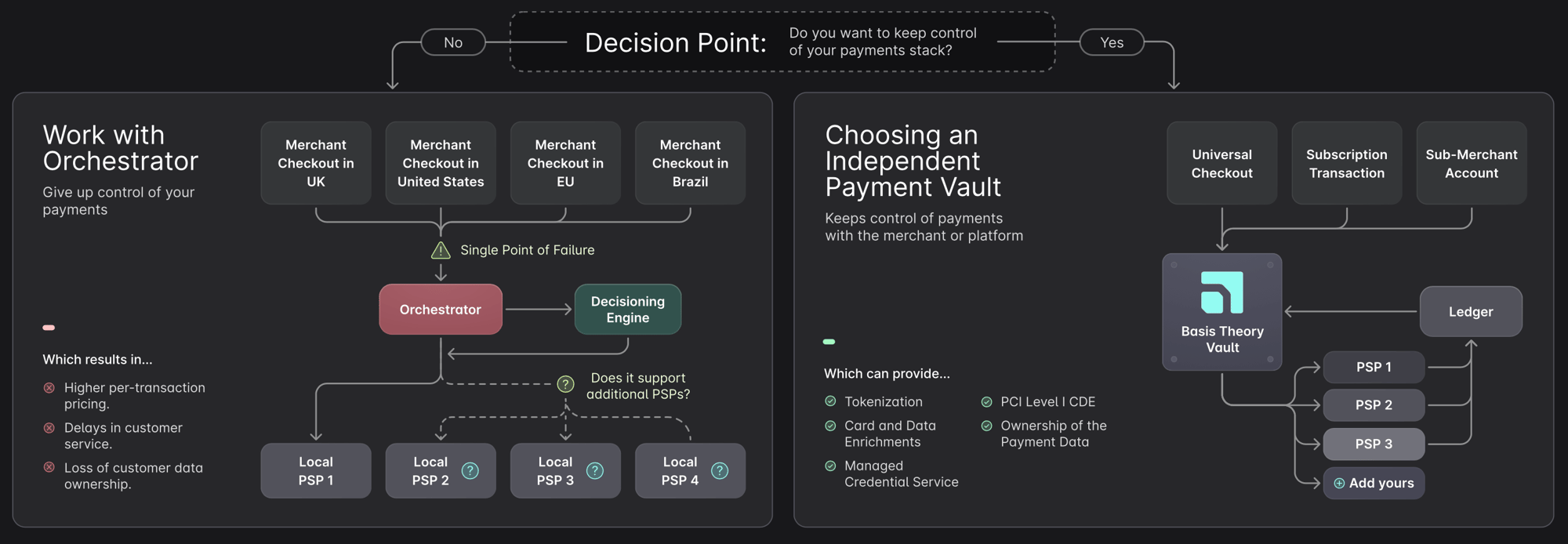
Offering both proxy service and managed connections, Basis Theory does not sit in the middle of MIT transactions. |
All processing goes through orchestration platform, creating risks of single-point-of-failure. Customers have little control over payments and lose ability to process if orchestrator has outage. |
| Pricing |
No usage-based fees. Pricing grows with your organization:
|
Contracts with usage-based per-transaction fees. This is on top of usage-based processing fees you'd also experience with PSPs. |
| Documentation |
Developer-focused documentation with helpful getting started guides |
Comprehensive API documentation |
| Migrating |
Transparent migration guides No vendor lock-in; offers helpful guides to migrate off Basis Theory should the need arise |
Guides to migrate to the platform but not to migrate off the platform |
"Basis Theory made us PCI compliant in a day, rather than months. The team has been a delight to work with and they beat other tokenization platforms on cost."